
Just as it is compelling to question the future and draw connections in that direction, the past, when viewed through an electronic microscope, offers an equally fertile field. It reveals invisible trajectories, forgotten causalities and technical decisions that official history has often pushed into the background.
We usually tell history through wars, revolutions, heads of state, inventions and social movements. Yet another history is woven inside machines. It runs through files, classifications, thresholds, programs and computational procedures.
For some time, I have wanted to develop a project around a broad question: how have computing and code influenced—and how do they continue to influence—the history of humanity?
This is not merely a history of computers. It concerns how we govern populations, organize work, distribute wealth, wage war, monitor individuals and construct representations of the world.
A segment of thought turned into rules
Computers imply code, and before code comes an initial process: the algorithm. An algorithm extends far beyond the computer. It is an ordered description of the logical steps required to reach an outcome or solve a problem.
It mediates between a human intention and its execution by a machine. A request expressed in English, French or Chinese must be transformed into operations precise enough to be translated into Pascal, Lisp, C, Basic, Python or another computer language.
An algorithm is therefore a segment of thought laid down as rules. To work, it must reduce ambiguity, define a universe, recognize situations, establish priorities and anticipate exceptions. Human thought hesitates and interprets; a computer procedure requires the world to be presented in a form it can process.
Describing every step required to open a door seems almost childish. Yet the procedure must identify the door, recognize the handle, decide whether to push or pull, check the lock and detect an obstacle. It must also ask: who is allowed to open it? How is that person recognized? What happens if the sensor is wrong? As soon as the lock becomes biometric, the logical exercise becomes political.
The bug as a forgotten piece of the future
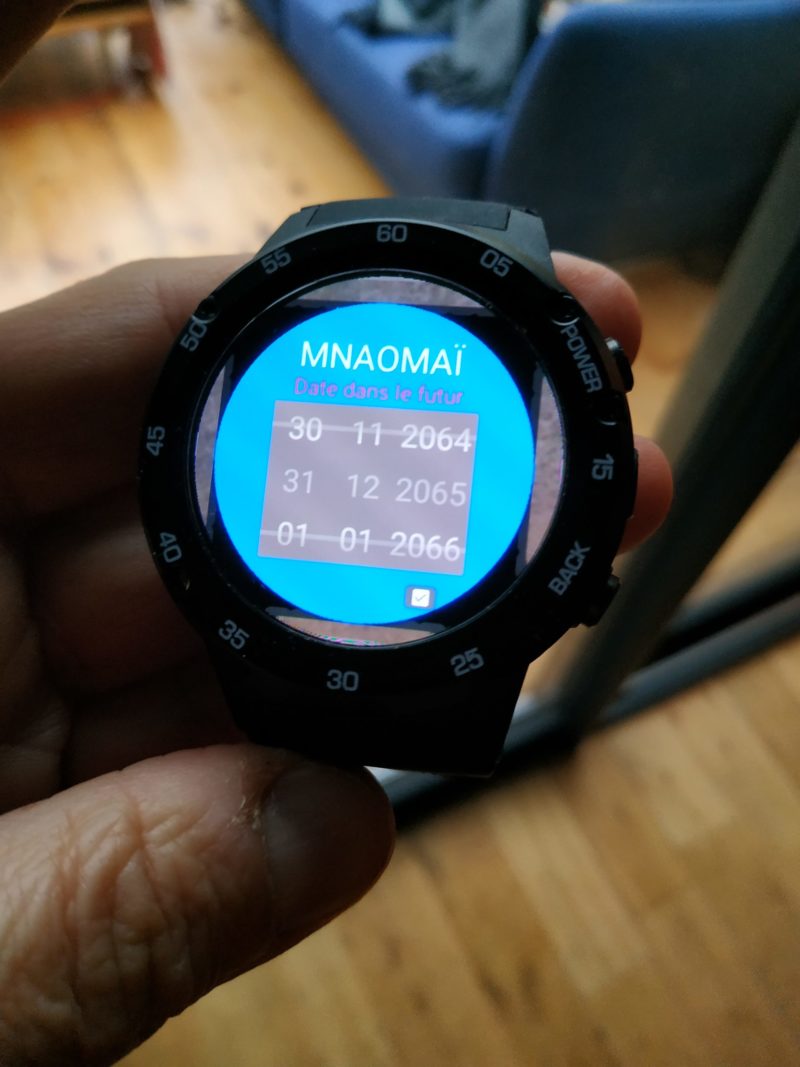
The Year 2000 problem remains a famous example of a technical decision producing consequences long after it was made. To save memory, many programs recorded years with only two digits. When “00” arrived, some systems risked interpreting it as 1900.
This was neither malicious software nor an absurd choice. It was often an understandable compromise when it was adopted. But the context changed, programs outlived their designers and entire infrastructures came to depend on that convention. Large-scale disaster was avoided precisely because thousands of engineers inspected and repaired the systems.
What matters to me is the lifespan of technical decisions. A tiny choice may remain buried for decades before encountering a situation its author never imagined. The technical past continues to act in the present.
We are not governed by robots
Algorithms organize routes, distribute advertising, recommend films, determine the visibility of posts, detect unusual payments, adjust prices and filter job applications. They operate throughout the economic and social chain.
We are not truly governed by humanoid robots. We are already extensively guided by procedures of classification, prediction and optimization.
With PageRank, Google did more than improve information retrieval. It produced a new hierarchy of knowledge: some pages become visible while others vanish into the depths of the results. The algorithm does not merely find the world. It helps put it in order.
The invisible hyperstructure
If we could assemble all the algorithms involved in the contemporary world, we would see a kind of invisible hyperstructure. It is not a central computer secretly controlling the planet. It has no single center or common will. It consists of millions of systems designed by corporations, states, banks, armies, platforms and public administrations.
These systems exchange data, react to one another and sometimes produce effects no actor fully anticipated. Automated finance offers a striking image. On May 6, 2010, the Flash Crash sent many US securities plunging before they recovered minutes later. The event did not originate in one omnipotent algorithm, but in interactions among market mechanisms and automated strategies.
The hyperstructure therefore acts less like a central brain than an environment. Humans react to machine outputs, and those reactions become new data for subsequent calculations. Prediction begins to manufacture what it claims merely to measure.
Hollerith: making a population computable
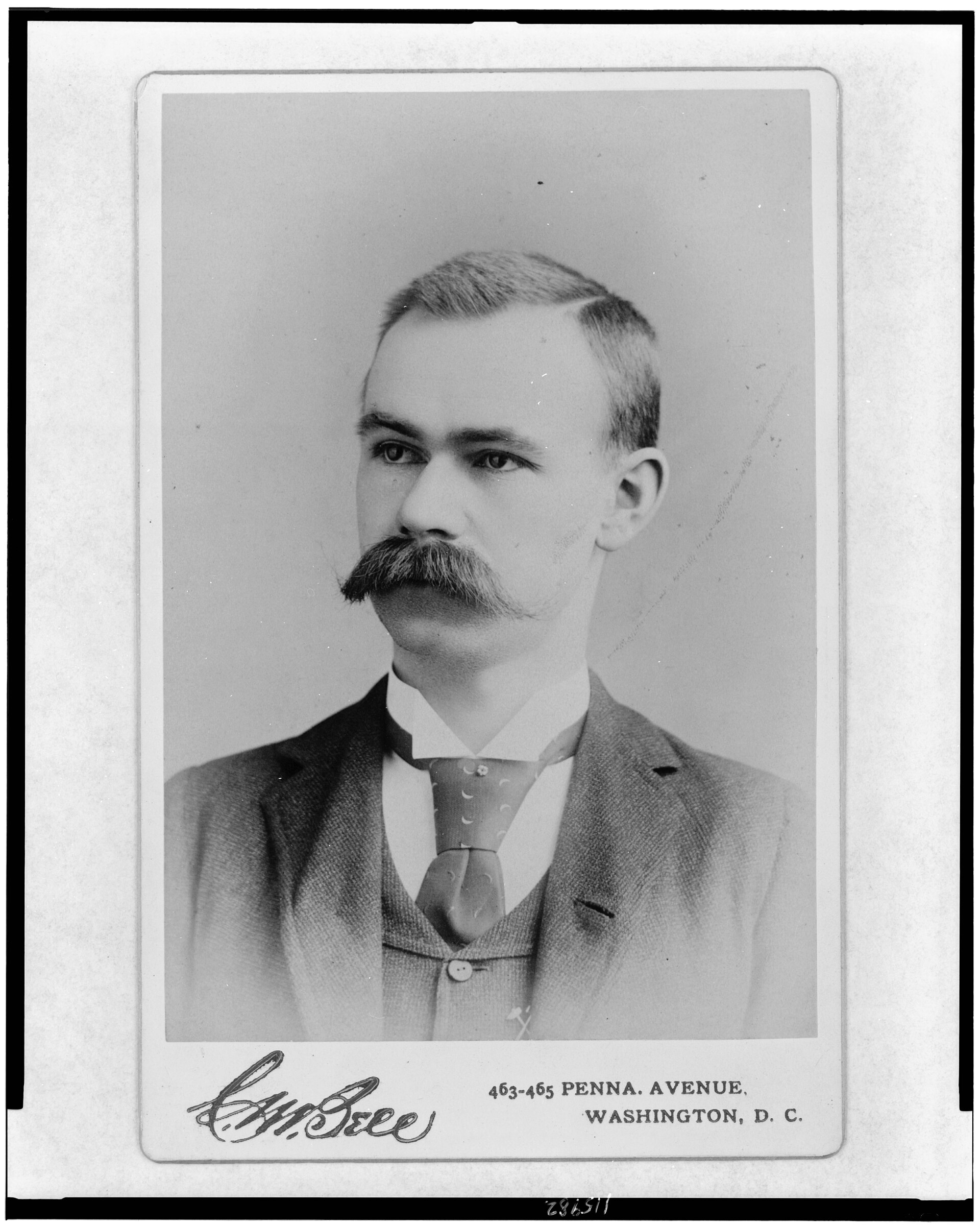
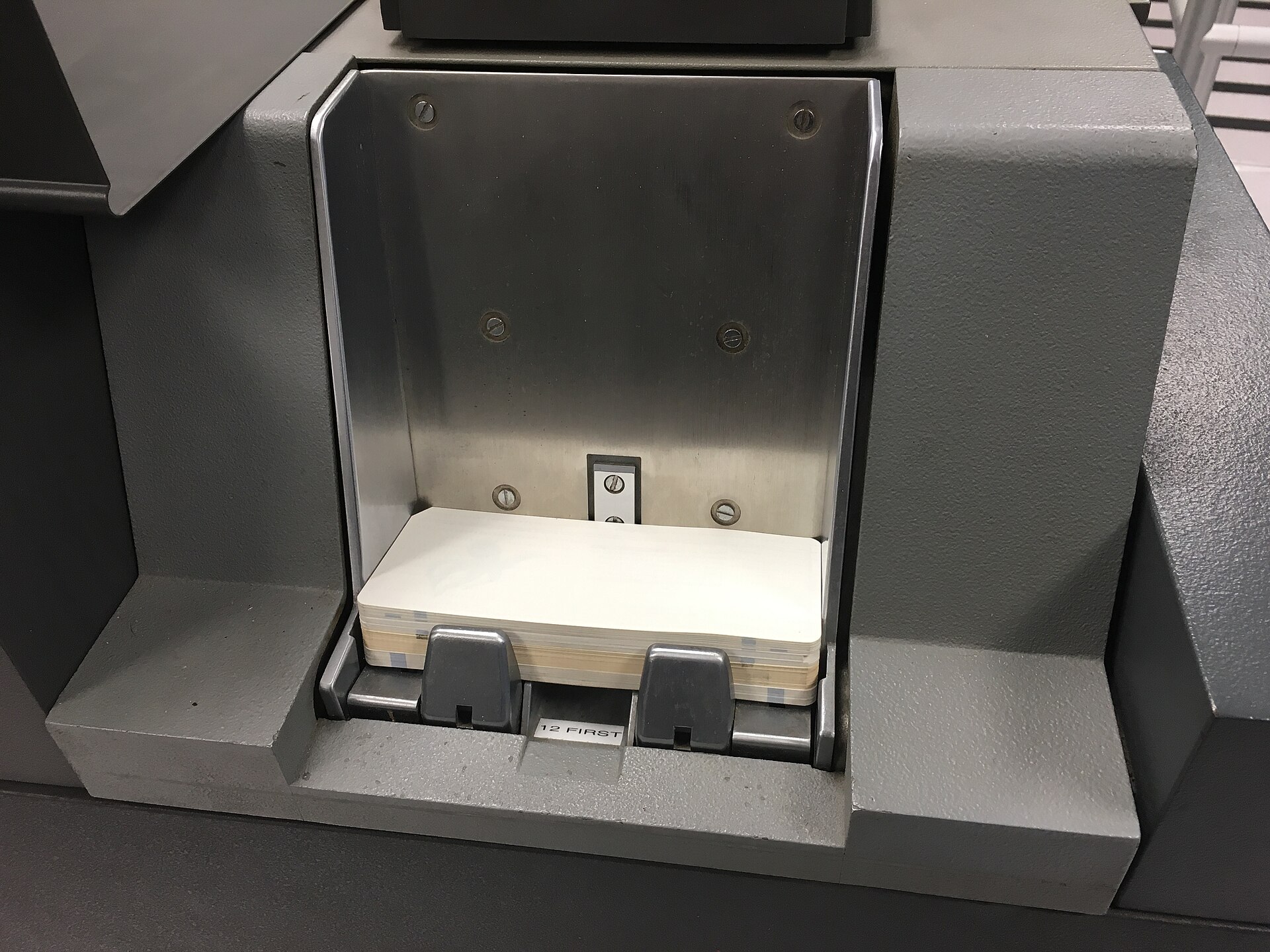
For the 1890 US Census, Herman Hollerith designed an electromechanical system using punched cards. Information about inhabitants was translated into holes, then counted and sorted by machines. The system addressed a real problem: manual processing had become too slow. It handled around sixty million cards and dramatically accelerated the census.
Hollerith’s foundational gesture was to turn human characteristics into standardized positions on a machine-readable medium: encode, sort, count.
These three operations still structure administrative computing. They can distribute services, but also identify groups and cross-reference files. The machine does not decide the moral meaning of a category. It increases its operational power. The turning point occurs when a population ceases merely to be known and becomes instantly searchable.
Therac-25 and Patriot: when computation meets bodies
Between 1985 and 1987, several patients were severely irradiated by the Therac-25, a software-controlled radiotherapy machine. The accidents resulted from a combination of software faults, misleading interfaces, excessive confidence in the program and inadequate hardware safeguards. The machine had not rebelled; the organization had stopped imagining that it could be wrong.
On February 25, 1991, at Dhahran, a Patriot missile battery failed to intercept a Scud that struck US barracks and killed 28 soldiers. An imprecision in the time calculation accumulated while the system was operating. After roughly one hundred hours, it shifted the area in which the radar searched for its target.
A minute numerical approximation had met the speed of a missile. A rounded value became a distance; the distance became a missed target; the missed target became death.

COMPAS: turning a population into an individual destiny
COMPAS is a risk-assessment tool used in the US criminal justice system. In Eric Loomis’s case, the Wisconsin Supreme Court allowed its consideration while requiring warnings about its limitations. Because the system was proprietary, the defendant could not fully examine how his score had been calculated.
Here the historical branch is individual. A statistical probability enters a criminal file and contributes to the story an institution tells about a man’s future. Yet that probability comes from groups. An individual future becomes an inherited average.
When cost replaces medical need
A 2019 study in Science showed how a healthcare-management algorithm underestimated the needs of Black patients. It used healthcare spending as a proxy for medical need. Because of historical inequalities in access to care, Black patients could have generated lower expenditure while being equally ill or sicker.
The algorithm did not require an explicitly racist instruction. Inequality was embedded in the chosen proxy. Cost is not need. Arrest is not crime. A click is not truth. Engagement is not the public interest. Whenever an indicator replaces a human reality, part of the world disappears.
Cambridge Analytica: fragmenting common debate
Cambridge Analytica used data derived from tens of millions of Facebook users to build profiles and target voters. The deceptive collection of data is documented. That fact must be distinguished from the spectacular claim that the company single-handedly decided the 2016 US election or the British referendum. Its electoral effectiveness remains disputed.
The danger requires no magical power of manipulation. It is enough for different voters to receive different messages, selected according to assumed vulnerabilities and invisible to the rest of the public. Two neighbors can be targeted with contradictory promises without any common space in which to compare them. The algorithm then changes the structure of democratic debate itself.
Pegasus: surveilling one person, reaching an entire circle
Pegasus is spyware sold by NSO Group to government clients. Once installed on a phone, it can provide access to messages, files, movements, microphones and cameras. Some attacks can be executed without any visible action by the target. Citizen Lab documented the compromise of 36 phones belonging to Al Jazeera journalists and executives.
A journalist’s phone contains far more than a private life. It contains sources and the geography of relationships. Surveilling one individual can endanger an entire network. Here the algorithm changes an intimate history: a message, a meeting or words spoken in a room suddenly belong to an invisible actor.
Why call them “cursed”?
The book takes a moral position. I do not want to narrate computing as a neutral succession of innovations. I want to examine concrete consequences: who benefits from efficiency, who bears the errors, who can challenge the system and who owns the infrastructure.
An algorithm can be accurate and still illegitimate. It can be transparent while pursuing a brutal goal. It can work perfectly while turning a human relationship into a market for predictions.
The word “cursed” does not describe the essence of computation. It identifies a situation in which technology closes the discussion. A category becomes natural. A score becomes evidence. Speed becomes necessity. Secrecy becomes expertise. Error becomes the private problem of the person who suffers it.
Turning the microscope back toward the future
Generative AI and software agents can now produce text, images, sound and code, and chain several actions together. The nearest danger may not be a conscious machine suddenly deciding to dominate us. It is a gradual delegation.
An administration adopts a sorting tool to save time, then loses the expertise required to operate without it. A company automates recruitment, then no one can explain why an application vanished. A media outlet optimizes articles for engagement, then ends up producing only what the metric rewards.
Each decision seems local and reasonable. Their accumulation creates dependency. The alternative requires a collective capacity to challenge systems: participation in their definition, independent expertise, and the ability to explain, interrupt and repair a decision—and sometimes to refuse automation itself.

Taking back control
The Book of Cursed Algorithms seeks to tell another contemporary history: the history of programs, procedures and models that have silently altered the trajectory of the world.
A hole turns a population into a database. A decimal changes the path of a missile. A statistical score enters an individual’s criminal case. A ranking decides what we see. The breach of a phone exposes an entire human network.
Algorithms never act in a vacuum. They are tied to institutions, economic interests, military doctrines and political decisions. But they possess a particular power: they allow an intention to continue acting long after the person who formulated it has left.
Perhaps that is their true curse. An old rule becomes a default value. An approximation becomes a decision. A decision becomes infrastructure. And infrastructure eventually appears to us as a natural feature of the world.
My project begins when we refuse that naturalization. The history of cursed algorithms is not only the history of the turns they have already caused. It is also the history of the turns we still have the power to choose.