
For a survival artificial intelligence
I would like to open a book, copy a program and make a machine speak that has never been connected to the internet. My first question would be: where do the birds of the blue moon live?
I can teach it that they live in salt cliffs. I want it to remember my answer and recover its source. Those cliffs might belong to a story I am writing. If the machine presents them as an observation, it has kept my sentence and lost what I told it.
An AI on a floppy disk
From early rules to language models
Two approaches already coexisted in the 1950s. In 1956, Allen Newell, Herbert Simon and Cliff Shaw’s Logic Theorist searched for proofs by applying rules of logic. Two years later, Frank Rosenblatt’s perceptron showed another way forward: a program could learn to classify examples by adjusting weights. In 1966 Joseph Weizenbaum’s ELIZA experimented with dialogue. It identified patterns in what people said and transformed them using rules written in advance. Logic Theorist · The perceptron · ELIZA.
Language models took the statistical route. In 2003 Yoshua Bengio and colleagues showed how a neural network could learn to predict the next word from a corpus. In 2017 the Transformer introduced an architecture based on attention, which lets the network weigh relationships among the elements of a sequence. GPT models use this architecture to predict what comes next in a text, one unit at a time. This history changes what we need to save. To revive an ELIZA dialogue I need its program and rules. To restore a trained GPT I also need the weights it learned. Bengio et al. · Vaswani et al..
Tiny‑2.1 is a language model made to run under DOS, a family of operating systems for early PCs that includes MS‑DOS and IBM PC DOS. You generally launch programs by typing their names. These computers could start from a floppy disk, a small removable magnetic disk. Fitting a model on one shows how much can be taken away while retaining the ability to produce text. The MS‑DOS Encyclopedia · Tiny‑2.1.
Tiny‑2.1’s weights occupy around 380 KB. These numbers are adjusted during training. When the model receives a question, its engine uses them to calculate what character might come next, then repeats the process with that character added. Large language models use the same principle, with units that may be pieces of words and networks that can use much richer context. Tiny‑2.1 was trained on around 3,500 facts. Beyond that ground it can keep producing plausible sentences without knowing the answer.
The instructions belong in the archive
Restarting a trained model requires its weights, a description of their format and an engine that can read them. Training from the beginning also requires the training data and the program that adjusts the weights. This is the difference between the two commands below. The first run creates poids.json. The second reads it to produce a sequence of characters.
Andrej Karpathy’s microgpt shows how training and generation can fit in a small Python program. The code here is an independent implementation for this experiment. It contains a corpus of six sentences, single-head causal attention and the derivative calculations that adjust the weights. With so little training material, it produces variations in language and can be wrong about facts. Andrej Karpathy’s original microgpt.
The language model
Copy the whole block into a file named microgpt_lune_bleue.py and run these commands in the same folder with Python 3.9 or later. The program uses only the standard library. The option --corpus chemin.txt lets you supply your own text with one example per line.
microgpt_lune_bleue.py
The notebook that asks questions
When a record is missing, the notebook asks what it should remember and saves the source you give it. You can tell it about the salt cliffs, close it and find your answer the next time it opens. Prefix the question with /corriger to record a new answer. The previous version stays in the database. The notebook is an external memory and runs separately from the language model.
Copy the following block to oiseaux_lune_bleue.py. The notebook stores its memory in carnet.sqlite. For the prompt it accepts the same question in French or English, provided you later use the same wording.
oiseaux_lune_bleue.py
I would print the code in ordinary characters so it could be typed in again. A known input and its expected result would let someone verify that it runs correctly on another machine.
How far back do we have to go?
When I say “from scratch,” which starting point do I mean? I can train this small model from random weights. Yet when I type the first command, my computer is already on and Python is installed. All that equipment is part of the experiment even if the printed code says nothing about it.
Suppose I find the book and a computer with a blank disk. I need a bootable copy of the operating system that I can restore on compatible hardware and a Python interpreter I can install offline. The notebook also needs that installation to include sqlite3. If all I have is Python’s source code, what will compile it? I already need a working compiler and an environment to run it. That is a central question in software bootstrapping. Building CPython and its modules · Bootstrappable Builds.
What if the computer has disappeared as well? I can preserve the circuit board plans, the processor’s instruction set and the software that starts the machine. They can help someone understand it or emulate it on another machine. Manufacturing it again would bring me back to the availability of components and the skills needed to produce them. Even the emulator has to run somewhere.
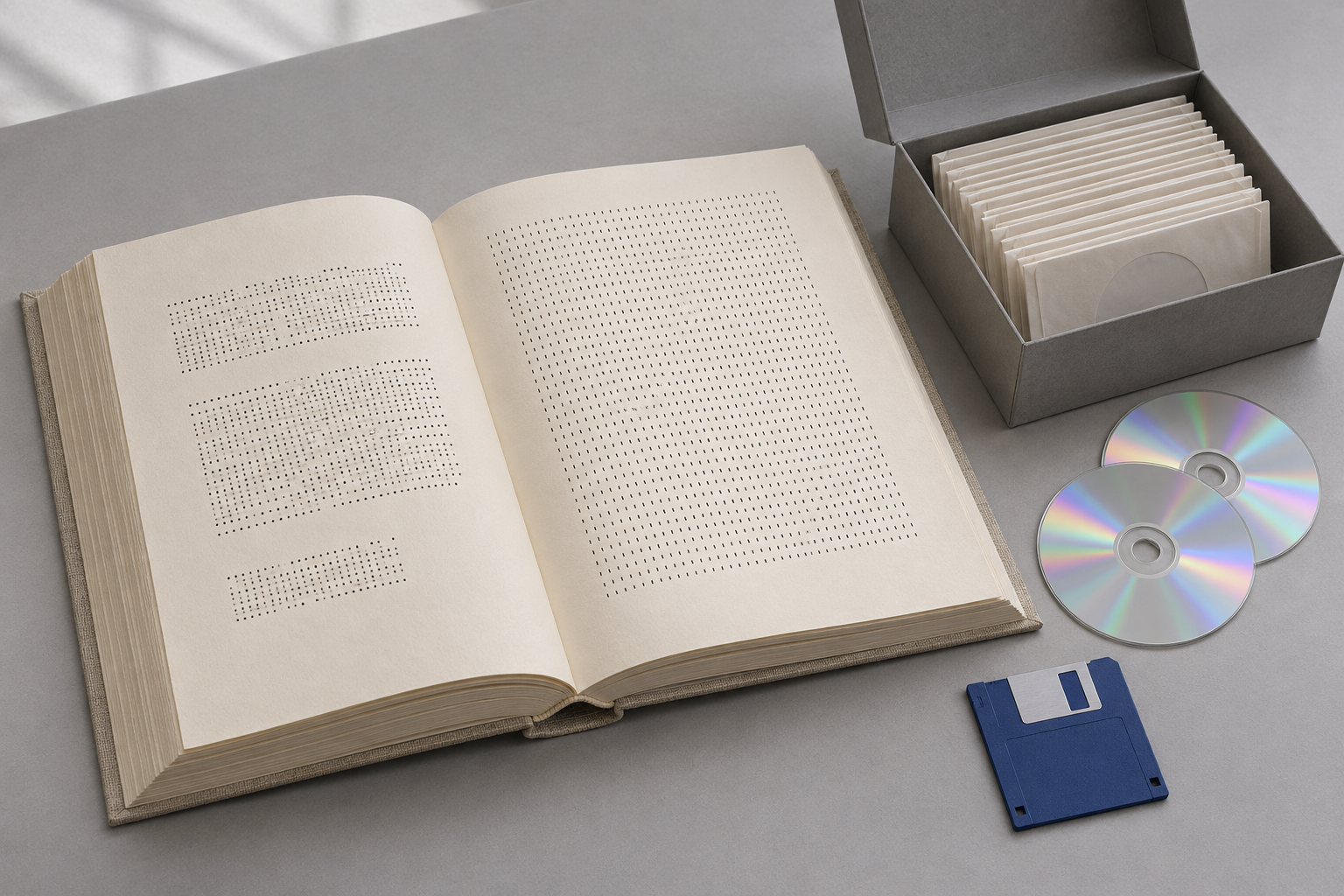
The problem follows me all the way onto paper. If the software that reads the PaperBack dots has vanished, how will I know where the first line begins? I would print an explanation readable to the naked eye and an example short enough to decode by hand. Otherwise the page that holds the program still depends on the program that reads it.
Each time I ask what to preserve, I discover something I assumed would still be there. For a first experiment I would state my starting point: a compatible computer, a drive and electricity. I would then give the box to someone with a blank disk and no network access. Could they install the system, run Python and retrieve the answer about the birds? When would they need to call me? That is probably where the book is still incomplete.
What paper can carry
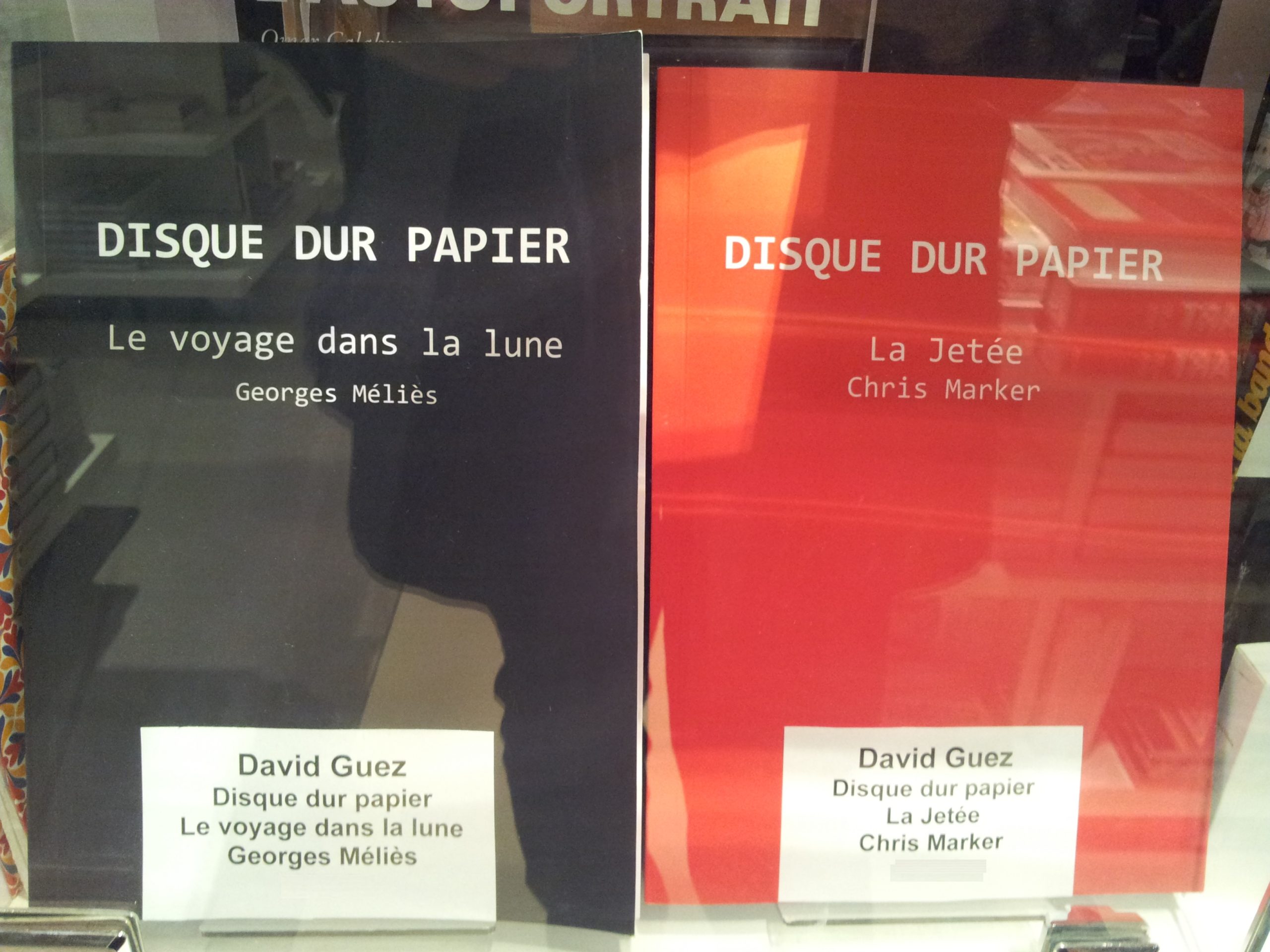
In Paper Hard Drive, I published Chris Marker’s La Jetée as a book of binary digits. With Binary Steles, I took the same research to materials such as stone and metal. The ZEROUN Manifesto asked what happens to collective memory when more and more of our history becomes files. With AI I want to preserve the program that makes these files active, along with enough explanation to reconstruct it. Paper Hard Drive · Binary Steles · ZEROUN Manifesto.

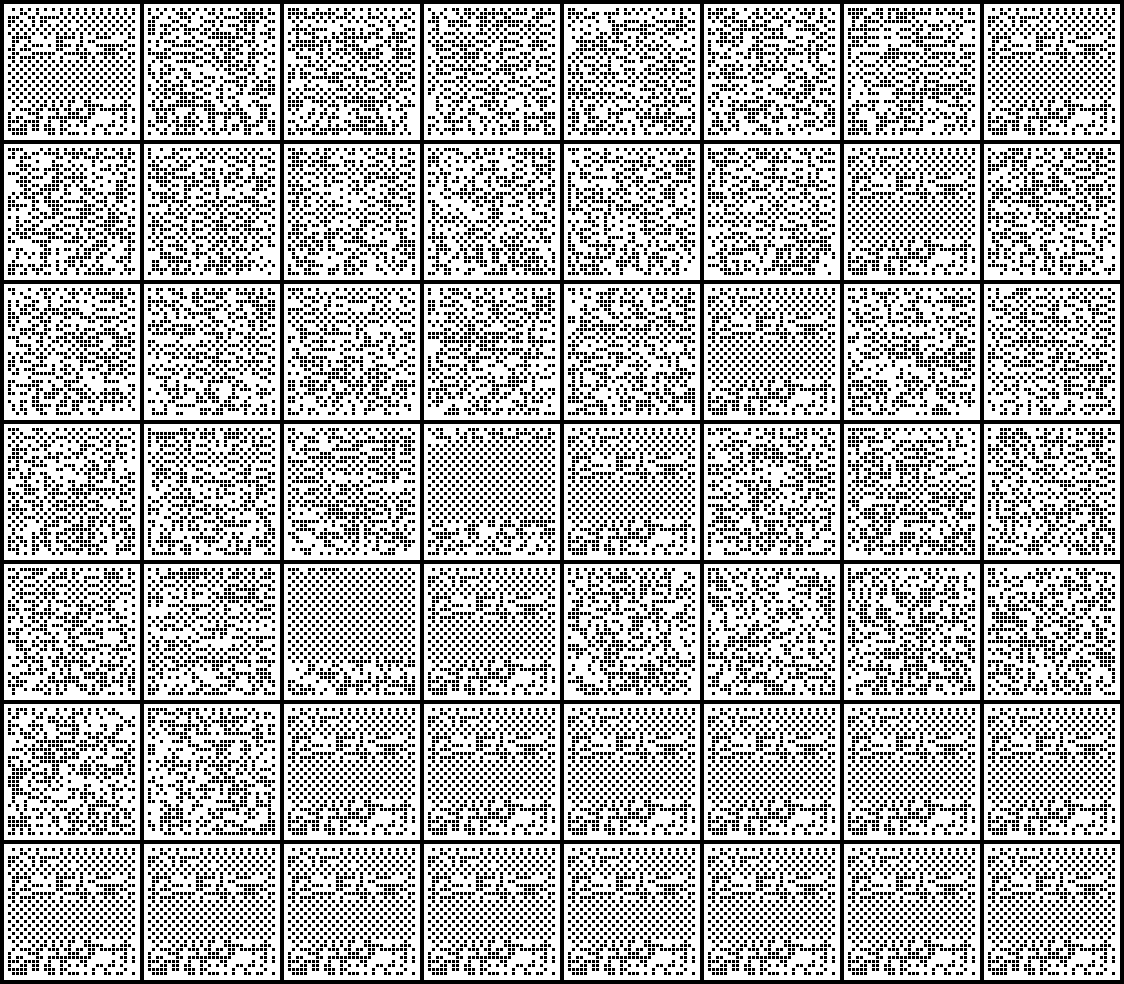
PaperBack turns the bytes of a file into a black-and-white grid. The idea is to print it, then scan it to recover the file. The pattern includes error-correction data to help restore bytes when some dots are read incorrectly. With the Mac version I encoded the Python notebook designed for this article. Restoring it from either the PNG or the BMP produced the original file byte for byte. This test used the digital images directly. The printed and scanned version remains to be tested. PaperBack, original software · PaperBack 2.0 for macOS.
The box and the library
For a more capable model I imagine a box of numbered DVDs. A quantised version of Qwen2.5 with 72 billion parameters takes about 47.4 GB. The model files alone would need at least eleven single-layer 4.7 GB DVDs. One hundred discs would provide a nominal 470 GB for a corpus and backup copies as well. The book would explain how to reassemble the fragments and verify their integrity. Someone would also have to keep a compatible drive and copy the archive from time to time. You find out how well the archive lasts by opening the box. Quantised model files · DVD capacity · Preserving optical media.
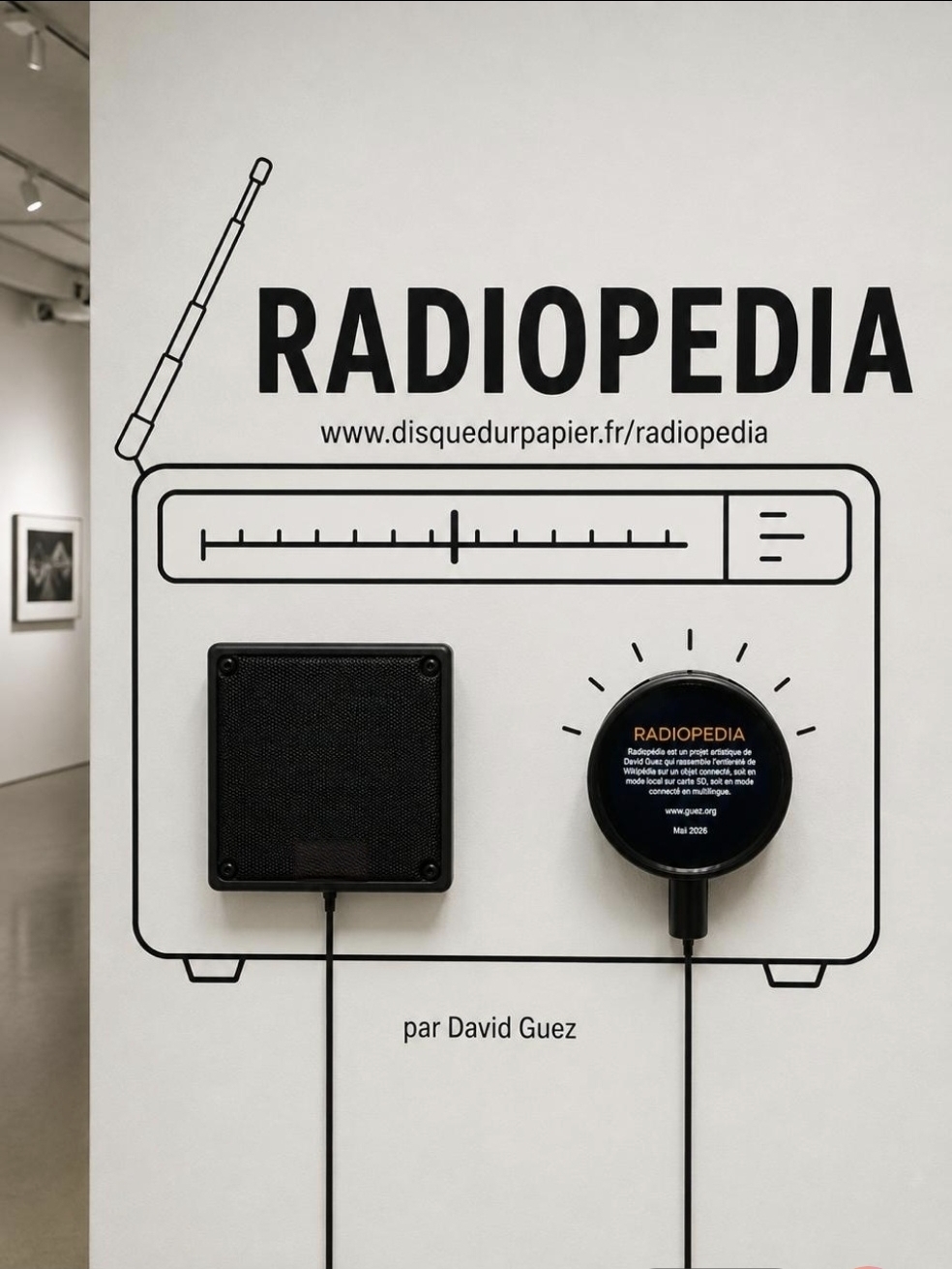
Radiopédia already makes Wikipedia available to listen to from a standalone object. Paper Hard Drive Wikipedia proposes moving the French encyclopedia into a printed library. I would keep documents and their sources separately so that they can still be consulted when the model is unavailable or its answer seems doubtful. Universal memory, in this sense, also relies on someone taking up the archive and adding what is missing. Radiopédia · Paper Hard Drive Wikipedia.
A seed for reconstruction
In a few years, I would like part of the box to fit into a notebook. Reducing the precision of the weights saves space. I would especially like to reduce what we have to have on hand to read them. What is the smallest program I can type back in that would let me rebuild the tools needed to run the model from the sources I have kept?
I imagine this core as a stem cell, with something of DNA in the way the instructions can guide its development. A cell needs a surrounding environment. This computer seed would have its own: a machine that can run its first instructions and sources available locally. GNU Mes and Guix provide a precedent. On x86, one stage of their bootstrap begins with a 357-byte assembler. The small program takes part in building more elaborate tools from their sources. The 357 bytes measure one starting point in the chain. GNU Mes bootstrap process.
We could aim for two sorts of reconstruction. With the preserved weights I can restore the model and give it an input whose result I already know. With the training program and a separate collection of texts, I can bring a different model into being. It will learn from what the person who opens the book manages to recover or chooses to give it. A seed small enough to copy can pass on this way of learning. The knowledge it depends on still takes up space.
I would like the reconstructed machine to be able, on request, to prepare everything needed for another copy of the archive. It would include the instructions and a means of verifying the files. Someone could take the copy elsewhere, open it on another machine and begin again. This is the sense in which I imagine it could replicate itself: each copy would contain what someone needs to make another one.